


The progression of the seasons in Napa County can easily be tracked by the activities occurring in the vineyards. Driving up the heart of the valley on highway 29, you can see vineyard stewards working throughout the year in a preordained rhythm: pruning the vines as the cover crop grows and the mustard blooms over the dormant season; training the new growth from the vines up the trellis as the season warms; leafing and thinning the vines throughout the growing season to adjust sunlight, air flow and crop size; and then the scramble of harvest once the brix hits the winemakers’ magic number.
But, have you ever looked up a steep vineyard block in the fall and thought- what are they doing with all that straw?! One often overlooked step late in the season is the implementation of erosion control measures for tractor roads and young vineyard plantings on steep slopes. The hustle to complete this task is often just as intense as harvest if there is a late harvest or an early rain storm forecasted. These efforts are not as sexy as harvesting luscious bunches of grapes, or as debated as pruning technique, but they are just as vital to the health and longevity of Napa County vineyards and watersheds.
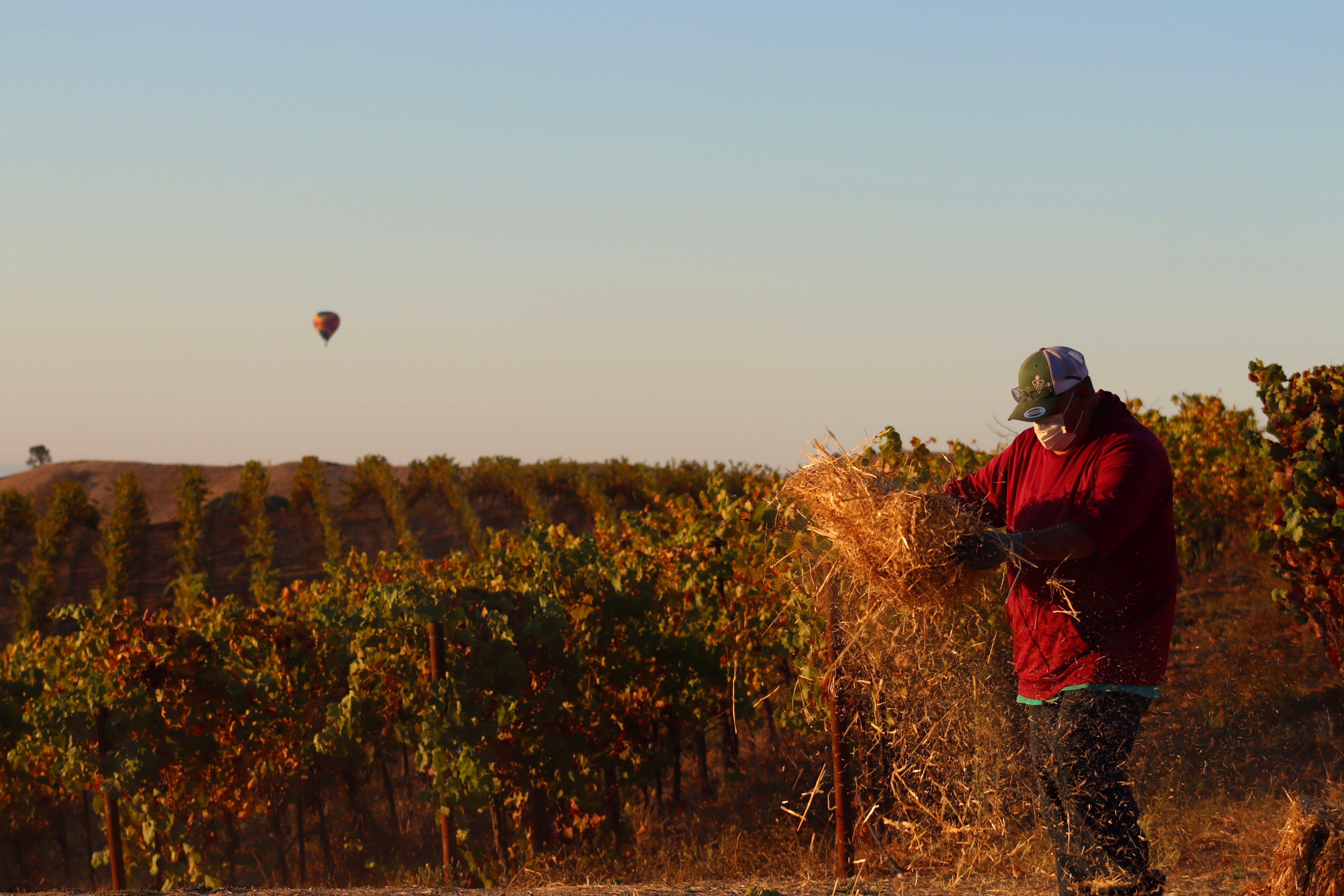
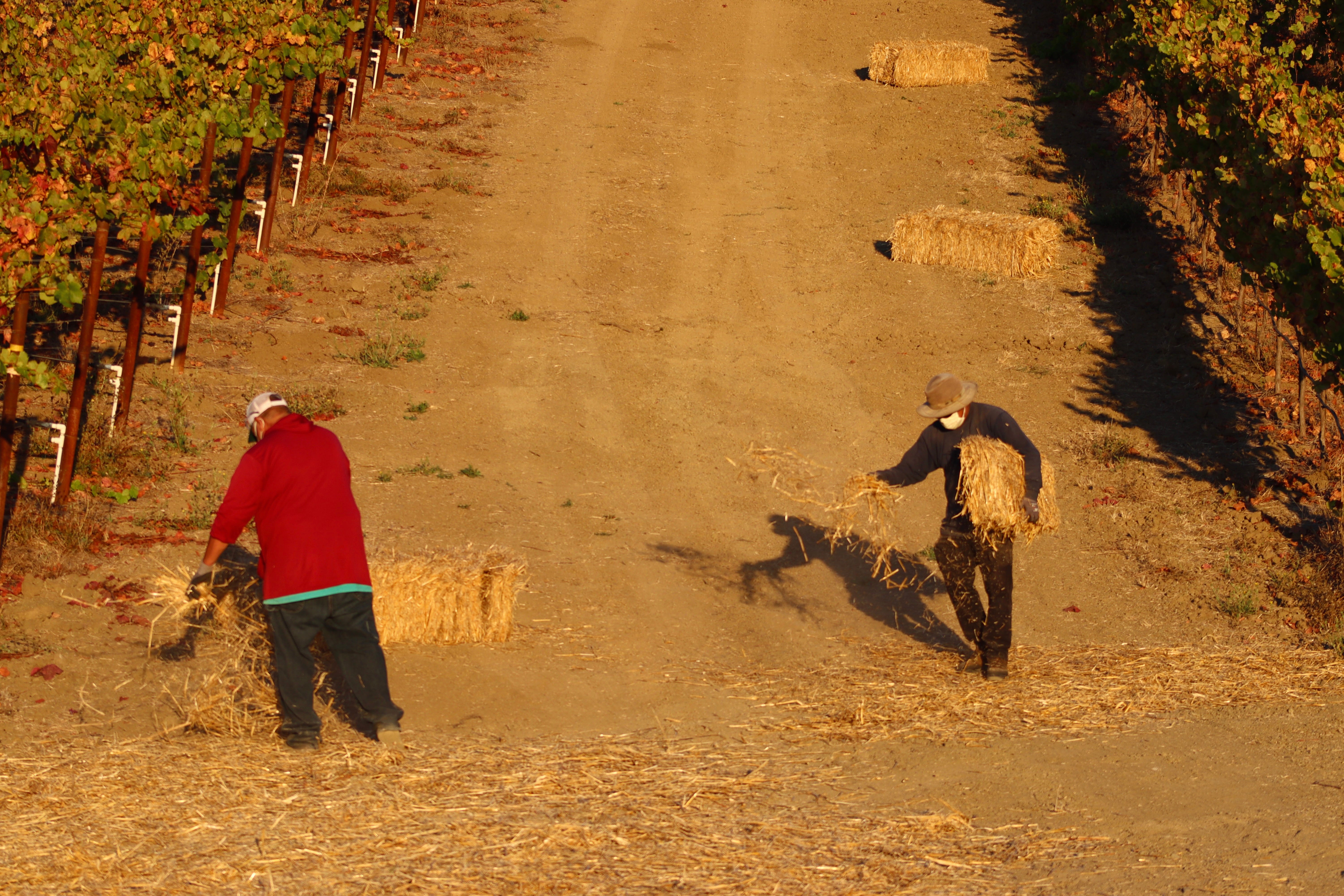
Driving by vineyards, you can see the work- tractor operators planting cover crop seed, workers installing straw waddles across steep sections, and spreading straw by hand on bare patches of soil and vineyard roads. All of this work is not just for the virtue of soil, but grew out of regulations enacted after years of uneducated soil management.
In 1998, the EPA deemed the Napa River to be ‘impaired’ due to a high concentration of sediment (topsoil from roads and vineyards) that, among other issues, was discouraging salmonids (salmon and trout) from thriving in the watershed. So the California State Water Board set standards for the Total Maximum Daily Load of fine sediment in the river. In response, community leaders started championing collaborative efforts to restore health to Napa County’s watersheds.
As an aside- this soil sediment issue also happens to be the birth story of Napa Green. An engaged and concerned set of vineyard owners came together to address this issue and the Napa Green Land program was launched in 2004. Since then, all of those early requirements have become environmental compliance (legally required), so the Napa Green Land program evolved into the Napa Green Vineyard program in 2022 to address our community’s next set of challenges, namely enhancing biodiversity, increasing carbon sequestration, and social equity in the wine industry.
‘Topsoil’ is the thin layer of soil in an ecosystem that supports biological life and sustains us. This soil has been accrued over millenia of plants growing, decomposing, and interacting with all types of fungi and bacteria. This process builds up a humus (in soils called organic matter) that supports the storage of nutrients and water to then build more vitality in the ecosystem (or agro-ecosystem). But topsoil is a fragile layer and- if poorly managed- can erode in one rain event, and then you are left with subsoil that will have less biological, physical, and chemical potential. Another essential role of organic matter is making soil more porous and able to accept large rain events with less flooding and run off and more infiltration and water storage. Agriculture is responsible for losing about 10 tons of topsoil per human every year. This is unsustainable- poor soil management is the root cause of the collapse of several ancient societies and human-caused desertification. We want topsoil to stay where it is, ideally under management that grows more topsoil, to continue feeding humans (or growing grapes), storing carbon, and contributing to a healthy watershed.
The regulations from the regional water board are fairly detailed, requiring an erosion control plan developed by an environmental engineer, using complicated calculations, to establish guidelines for any vineyard block over 5% slope. This includes having permanent cover crop in between the vines, only allowing tillage on a certain percentage of the vineyard annually to reestablish cover crops, straw waddles (straw stuffed in a mesh tube) are required across steep vineyard sections, and loose straw has to be spread across bare soil on slopes (mostly vineyard roads that won’t be able to establish a cover crop). These measures are mainly needed during the first few years of a replanted vineyard while the cover crop is establishing, but Napa vineyards are always in a rotation of replant, with many vineyards only lasting 25 years.
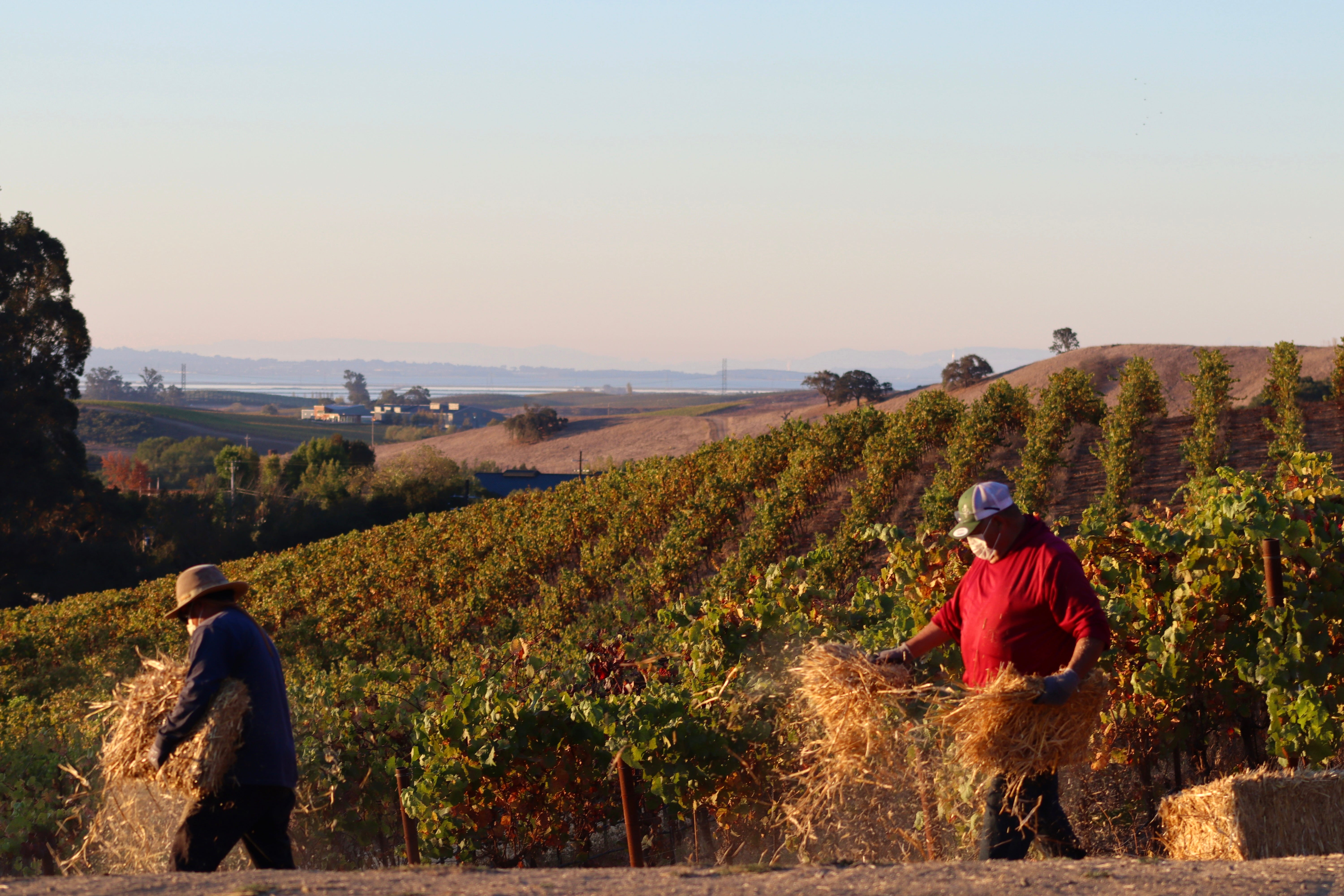
So, next time you see folks spreading straw or installing erosion control measures, be sure and thank them! This impressive effort right after the harvest season is just another way that our vineyard stewards are preserving Napa County to continue producing the best wines in the world and bringing life back to the Napa River with salmon, birds, otters, beavers and even the adventurous dolphin able to thrive.
“It takes a half a millennia to build two centimeters of living soil and only seconds to destroy it.” - Anne Glover
More information can be found on the Water Board’s website: https://www.waterboards.ca.gov/sanfranciscobay/water_issues/programs/agriculture/vineyard/index.html